Designing With Kids Just Got Easier
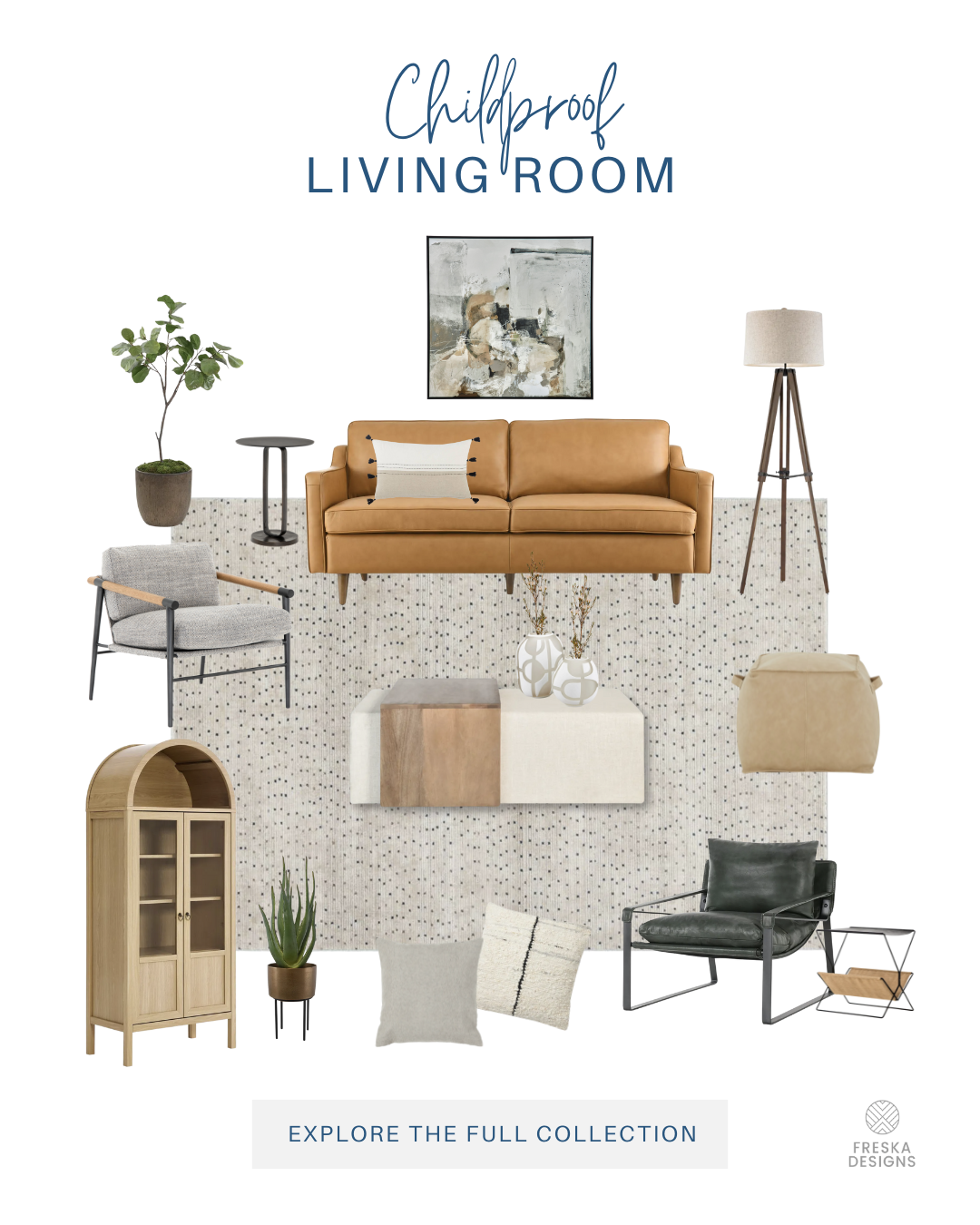
As a designer and a mom, I’ve spent years figuring out how to make a home feel beautiful without turning into a “don’t-touch-that” zone. Because let’s be real: kids live hard. And your space should be able to keep up without looking like a daycare center.
That balance between style and practicality is absolutely possible. You just need the right pieces, the right mindset, and a few smart strategies.
Today, I’m bringing you my top tips—plus a curated shoppable collection (by yours truly) to help you see these ideas in action. Whether you’re starting fresh or just looking to upgrade a few key pieces, this guide will help you create a space that works beautifully for your family, not against it.
TOP 5 TIPS FOR FURNISHING A (BEAUTIFUL) KID-FRIENDLY HOME
1. SOFTEN THE EDGES
Wobbly little legs and sharp table corners don’t mix! Skip the glass and pointy edges—rounded tables or upholstered ottomans (try adding a tray on top!) make stylish and kid-friendly alternatives.
2. RUGS THAT CAN HANDLE IT ALL
Spills, crumbs, and mystery stains happen. Polyester blends and indoor/outdoor rugs are lifesavers, while cotton blends? Not so much—cleaning them is a nightmare!

3. THINK BEYOND FRAGILE DECOR
Accessories matter! Swap heavy, breakable decor for wood accents and opt for canvas wall art—it won’t shatter (or hurt so much) if it takes a tumble.
4. LIFE-PROOF UPHOLSTERY
Faux leather, performance fabrics, and stain-resistant materials keep your sofa looking chic without the stress. Because snacks and spills are inevitable (by kids and adults)!
5. FAUX PLANTS FOR THE WIN
Love greenery but can't keep your plants alive? :) Faux plants have come a long way—no watering, no digging toddlers, just effortless style.
Frequently Asked Questions
1. Can a home really be both kid-friendly and well designed?
Yes. A beautiful, functional home doesn’t require sacrificing style—it just means choosing materials and layouts that can handle real life. When durability and comfort are considered from the start, spaces naturally feel more relaxed and livable for everyone.
2. What are the biggest design mistakes parents make when furnishing their home?
Going too fragile or too precious too early. Homes designed around constant “rules” can feel stressful. Prioritizing softer materials, forgiving finishes, and flexible pieces creates a space that works with kids instead of fighting against them.
3. How do I make my living room safer for kids without it looking childish?
Focus on form and function. Rounded furniture, upholstered pieces, and stable decor can blend seamlessly into a stylish space. The key is choosing adult-looking pieces that happen to be more forgiving, rather than obvious “kid” furniture.
4. What materials hold up best in homes with children?
Performance fabrics, durable rug materials, and easy-to-clean surfaces make everyday messes far less stressful. These materials are designed to withstand wear while still looking polished, which is especially helpful in high-traffic areas.
5. Is it worth designing for kids if their needs change so quickly?
Absolutely. The goal isn’t to design for one specific age, but to create a flexible foundation that adapts as your family grows. Thoughtful choices early on can support changing stages without constant redesign.
Looking for furniture that’s both stylish and family-friendly? I’ve already done the digging so you don’t have to.